
Meditation is widely recognized as one of the most effective tools for cultivating mental clarity, emotional equilibrium, and physiological resilience. Yet, many people who sit down to meditate encounter a persistent barrier: a racing mind that refuses to settle. Sitting in stillness while thoughts scatter across daily obligations, anxieties, and random memories can quickly turn a peaceful intention into an exercise in frustration.
The missing link for many practitioners is the deliberate integration of structured breathing techniques. Breathwork serves as a physical, direct bridge between the conscious mind and the autonomic nervous system. By learning how to guide your respiratory patterns before and during a meditation session, you can systematically calm physiological arousal, anchor scattered attention, and access much deeper states of contemplative stillness.
The Physiological Connection Between Breath and Brain
To understand why breathing techniques transform meditation, it is essential to look at the underlying physiology of respiration. Breathing is one of the few bodily functions that operates both automatically and under conscious control. This dual nature gives you direct manual access to the autonomic nervous system.
When you experience stress, your breathing unconsciously shifts to a rapid, shallow pattern focused high in the chest. This activates the sympathetic branch of the autonomic nervous system, releasing cortisol and adrenaline, accelerating the heart rate, and preparing the brain for threat detection. Trying to quiet mental chatter while your body remains in this heightened fight-or-flight state is an uphill battle.
Conversely, slow, controlled diaphragmatic breathing stimulates the vagus nerve, the primary nerve of the parasympathetic nervous system. Vagal stimulation signals the sinoatrial node of the heart to slow its pacing, reduces systemic blood pressure, and prompts the brain to downregulate stress hormone production. By mechanically slowing the breath, you signal the brain that the physical body is safe, establishing the biological conditions required for deep mental stillness.
Key Benefits of Integrating Breathwork with Meditation
Pairing intentional breath patterns with a meditation practice offers distinct advantages that enhance both subjective depth and measurable physiological markers.
-
Faster Transition into Stillness: Conscious breathing acts as an on-ramp to meditation, cutting down the initial minutes of restlessness and helping you drop into focus far more quickly.
-
Enhanced Heart Rate Variability (HRV): Structured rhythmic breathing promotes respiratory sinus arrhythmia, synchronizing heart rate fluctuations with breath cycles to enhance overall nervous system flexibility and cardiovascular efficiency.
-
A Concrete Somatosensory Anchor: Unlike abstract visual imagery, the tactile sensation of airflow and diaphragmatic movement provides a tangible, real-time focal point that keeps the mind from wandering.
-
Improved Carbon Dioxide Tolerance: Controlled slow breathing gently elevates arterial carbon dioxide levels to an optimal baseline, dilating blood vessels and increasing oxygen delivery to cerebral tissues via the Bohr effect.
-
Emotional Downregulation: Conscious breath manipulation interrupts reactive cognitive loops, creating a gap between external emotional triggers and internal psychological reactions.
Foundational Breathing Techniques for Meditators
Different breathing protocols produce distinct neurological and energetic effects. Incorporating specific techniques based on your current state of arousal allows you to tailor your pre-meditation preparation to your immediate needs.
Box Breathing (Sama Vritti Pranayama)
Box breathing, also known as equal-ratio or square breathing, utilizes a four-part cadence that stabilizes mental fluctuations and sharpens sensory focus.
-
Structure: Inhale for four counts, hold the breath for four counts, exhale for four counts, and hold the breath empty for four counts.
-
How It Works: The balanced intervals bring equilibrium to the nervous system, eliminating physical restlessness while sharpening executive cognitive control in the prefrontal cortex.
-
Application in Meditation: Perform four to six cycles of box breathing at the very start of your session to eliminate mental turbulence before transitioning into open awareness.
The 4-7-8 Relaxing Breath
Developed by integrative medicine specialists and rooted in classical yogic traditions, the 4-7-8 pattern is designed specifically for deep parasympathetic activation.
-
Structure: Inhale quietly through the nose for a count of four, hold the breath comfortably for a count of seven, and exhale audibly through slightly parted lips for a count of eight.
-
How It Works: The prolonged exhalation mechanically stimulates the baroreceptors in the carotid sinuses, prompting an immediate deceleration of the heart rate and clearing anxious mental loops.
-
Application in Meditation: Use this technique whenever high stress, racing thoughts, or physical muscle tension makes silent, unguided meditation difficult to sustain.
Alternate Nostril Breathing (Nadi Shodhana)
This classical technique involves alternating the airflow between the left and right nasal passages using light finger placement on the sides of the nose.
-
Structure: Close the right nostril with the thumb, inhale smoothly through the left nostril, close the left nostril with the ring finger, release the thumb, and exhale through the right nostril. Inhale through the right nostril, close it, and exhale through the left nostril to complete one full round.
-
How It Works: Stimulating the nasal mucosa alternately impacts autonomic tone and balances hemispheric brain activity, cultivating an internal state of centered alertness.
-
Application in Meditation: Practice five to ten rounds immediately before insight meditation or analytical contemplation to foster mental clarity and equilibrium.
Diaphragmatic Belly Breathing
Many modern individuals have fallen into the habit of chronic chest breathing, which utilizes accessory neck and shoulder muscles while keeping the nervous system on edge.
-
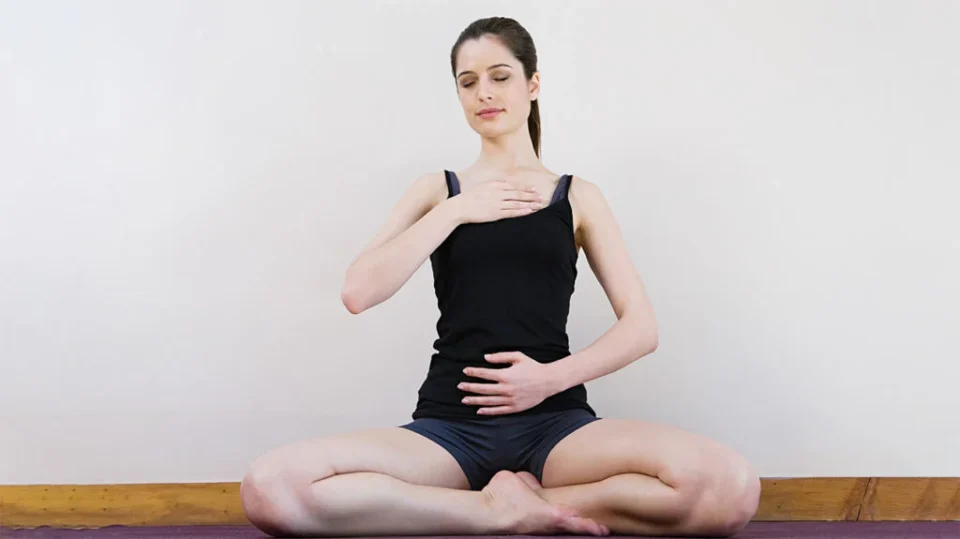
Structure: Place one hand on the upper chest and the other on the lower abdomen. Inhale slowly through the nose, ensuring the bottom hand rises as the diaphragm contracts downward, while the top hand remains virtually still. Exhale passively and let the abdomen sink back toward the spine.
-
How It Works: Maximizes gas exchange in the lower lobes of the lungs, where the highest concentration of parasympathetic nerve endings resides.
-
Application in Meditation: Maintain this gentle, natural diaphragmatic rhythm throughout the entire meditation sitting as your continuous background baseline.
Step-by-Step Guide to Structuring a Breath-Enhanced Session
To make the most of combining breathwork with meditation, follow a progressive framework that guides your physiology from daily busyness into quiet contemplation.
-
Establish a Neutral Posture: Sit upright in a supportive chair or cross-legged on a firm cushion. Keep the spine elongated without rigid tension, allowing the rib cage and diaphragm full three-dimensional freedom of movement.
-
Clear the Nasal Passages: Take two or three deep, unhurried breaths, exhaling fully through the mouth to release residual surface tension in the jaw, neck, and shoulders.
-
Begin Active Breath Regulation: Spend three to five minutes practicing a chosen technique, such as Box Breathing for focus or the 4-7-8 pattern for relaxation. Keep counts steady and avoid straining the lungs.
-
Transition to Passive Breath Observation: Release deliberate control over the respiratory cycle. Allow the body to breathe itself naturally, shifting your mental role from the controller of the breath to the neutral observer of the breath.
-
Anchor Attention on Breath Sensations: Rest your mental awareness on a specific physical sensation, such as the cool air passing the tip of the nostrils or the subtle movement of the navel. When the mind wanders, simply acknowledge the thought and guide your attention back to the breath.
-
Conclude with Grounding: Finish the session by taking one slow, deep diaphragmatic breath, gently wiggling your fingers and toes, and pausing to register your updated state of physical and mental calm before resuming daily tasks.
Frequently Asked Questions
Why do some people feel lightheaded or dizzy when practicing breathwork before meditation?
Lightheadedness typically occurs when a person inadvertently hyperventilates by breathing too fast or forcing too much volume into the lungs. This causes an excessive drop in arterial carbon dioxide, leading to mild cerebral vasoconstriction. If you experience dizziness, immediately stop the structured pattern, return to normal, gentle nasal breathing, and reduce the intensity of your inhales during future sessions.
Is it necessary to breathe exclusively through the nose during meditation?
Yes, nasal breathing is strongly recommended for meditation unless you are experiencing severe congestion. The nasal passages filter, warm, and humidify the air while adding natural resistance that encourages diaphragmatic engagement. Breathing through the nose also stimulates the production of nitric oxide in the paranasal sinuses, which improves oxygen uptake and promotes systemic vasodilation.
What should a person do if counting breath intervals causes more anxiety than calm?
If rigid numerical counts induce stress, abandon structured counting and focus instead on fluid, tactile sensations. Shift your focus to making the exhale simply feel noticeably longer and smoother than the inhale without tracking seconds, or place a hand on your stomach and follow the physical rise and fall of the abdomen.
How long should the breathwork portion of a meditation session last?
For a standard fifteen to twenty minute meditation session, spending three to five minutes on active breathwork is ideal. This provides sufficient time to downregulate the autonomic nervous system without taking away from the subsequent period of silent, unstructured meditative awareness.
Can breath-focused meditation help individuals who suffer from chronic insomnia?
Yes, using an extended-exhale breathing technique like the 4-7-8 pattern combined with body-awareness meditation in bed helps suppress sympathetic nervous system arousal and slows racing cognitive rumination. This triggers the natural release of melatonin and sets up the neurochemical conditions necessary for sleep onset.
Should the breath be held forcefully during the retention phases of breathwork?
No, breath retention should always feel soft, expansive, and relaxed rather than strained or forced. You should never clamp down tightly at the glottis or tense the throat. Instead, think of breath retention as a peaceful, momentary pause where the respiratory muscles rest before the natural transition into the next phase of the cycle.
Does practicing breathwork while sitting in a chair offer the same benefits as sitting on the floor?
Yes, the physiological benefits of breathwork and meditation depend on spinal alignment and unrestricted diaphragmatic movement, not the specific seating surface. Sitting upright on a firm chair with both feet flat on the floor and the hips slightly elevated provides excellent posture and allows the lungs to expand freely without unnecessary hip or lower back strain.
